Kubernetes Explained: A Practical Guide for DevOps Engineers

If you had experience in working with DevOps , you probably had faced one of these annoying situations. Things are smooth, efficient and work smoothly, but the moment real users arrive. Things start breaking! Traffic spikes, container crashes, servers struggle and what not . You’re then forced to scale systems manually at odd hours. This is exactly the problem Kubernetes was built to solve. Though containers made applications portable & ensured easy deployment . But at the same time created a new challenge -managing hundreds or thousands of containers reliably. Kubernetes stepped in to bring order to this chaos. Today, for modern DevOps , Kubernetes has become one of the most important technologies . It powers everything from startups to large enterprises. Choosing the best devOps certification and enrolling in industry relevant devOps courses can prepare you for real-world DevOps challenges.
In this blog, we’ll dissect down Kubernetes in a simple, practical way and explain why it matters so much for DevOps engineers. best devops certification,devops courses
What is Kubernetes?
Kubernetes is considered as an open-source platform that helps you manage containerised applications automatically. It decides where your containers should run, keeps them healthy, and scales them when needed.The word “orchestration” sounds complex, but the idea is simple. Imagine a situation where a traffic controller manages a vehicle at a busy junction . The traffic controller ensures smooth movement , instead of drivers figuring things out on their own . Kubernetes does the same for containers .It decides which container runs where, restarts it if something goes wrong, and balances traffic automatically.
It’s important to understand that Kubernetes does not replace Docker. Docker packages applications into containers whereas Kubernetes takes those containers and manages them at scale. Together, they are the foundation of modern cloud-native systems.
Why Kubernetes Is Important in DevOps
DevOps is all about automation, speed, and reliability. When things are inr this mindset, Kubernetes perfectly fits into it .Kubernetes secures automatic deployment instead of manual.Scaling happens automatically instead of through emergency fixes. If a container crashes, Kubernetes replaces it without waiting for human intervention. This reduces downtime and increases confidence in production systems.
Kubernetes ensures that applications behave the same way across development, testing, and production environments. It is consistent in the process. This removes many of the “it works on my machine” problems DevOps teams face.
For DevOps engineers, Kubernetes is not just limited to a tool. It’s a platform that enables faster releases, safer updates, and more stable systems.
How Kubernetes Works (High-Level Overview)
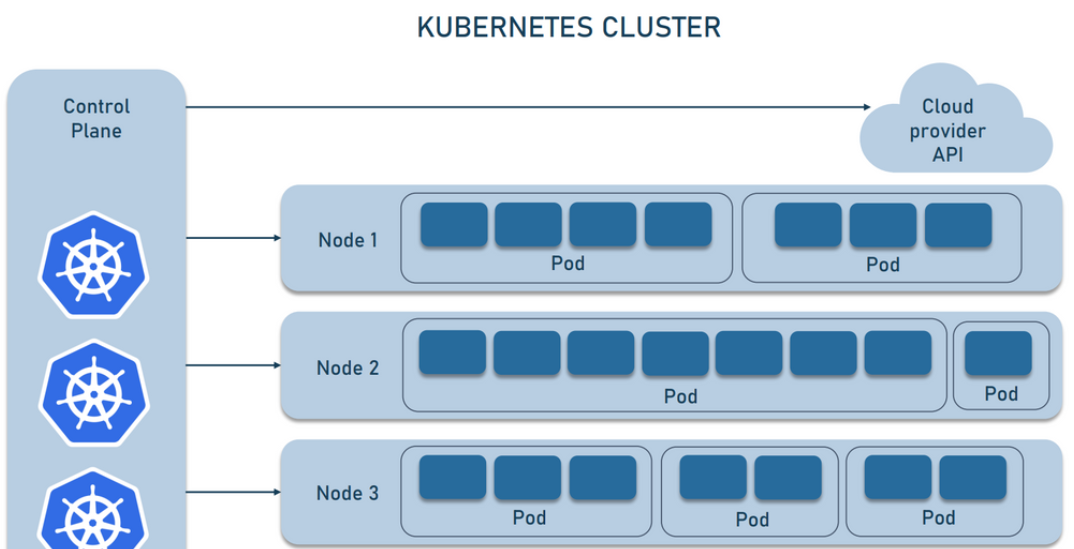
A cluster is a collection of machines which collaborates to run and manage applications .At a broad level, Kubernetes works by organizing resources into clusters. In clusters, these machines are known as nodes and they ensure computing power required to keep applications running efficiently. Each node runs containers inside units called pods. A pod is the smallest deployable unit in Kubernetes and usually contains one or more related containers. Kubernetes constantly watches these pods and ensures the desired number of them are running.
If a pod crashes,it is replaced by Kubernetes. When traffic increases, it adds more pods to handle the load .When demand drops in , it scales things back to save resources.This behaviour is called self-healing and auto-scaling,
Key Kubernetes Components Every DevOps Engineer Should Know
Kubernetes has multiple central components, but you don’t need to master all at once.
For decisions about scheduling, scaling and maintaining system health, the control plane is responsible for managing the cluster. Worker nodes are the machines that actually run applications.Pods group containers together and represent a single instance of an application. Services provide stable access to these pods, even when pods are created or destroyed dynamically.ConfigMaps and Secrets keeps application configuration and sensitive data separate from the code base.This improves security and flexibility, which is essential for reliable and secure DevOps environments.
Understanding these components conceptually is enough for beginners. Depth comes later with practice, projects, case studies and assignments.
Why Kubernetes Is Popular in India
Kubernetes adoption in India has grown rapidly, and for good reason.
For Indian startups , cost efficiency is the main factor. They need growth fast but with lean teams . Kubernetes allows them to scale applications without hiring large operations teams. Its cloud-native design aligns perfectly with India’s cloud-first approach. It is a matter of better resource utilisation .
How to Start Learning Kubernetes
Kubernetes is built upon the foundation of containers.Start with understanding Docker. Once you’re comfortable with containers, focus on Kubernetes concepts before commands. Learn about what clusters, pods, and services are, and about their collaboration.
Hands-on practice gives an edge.Before rushing for complex configurations ,start with small setups and simple deployments. Focus on understanding workflows rather than memorising YAML files. Repeat and be consistent.
Conclusion: Is Kubernetes Worth Learning in 2026?
For DevOps Engineers, Kubernetes is no longer an option rather a necessity. In the era of modern software delivery ,it has become an integral part. It ensures that teams can automate deployments , scaling and system reliability. Particularly in cloud-first organizations across industries ,its adoption is gradually increasing . If you’re planning a DevOps career in 2026, Kubernetes is absolutely worth learning. Almost every modern tech team relies on it to run their application at scale. The demand isn’t slowing anytime soon.Start small, understand concepts ,practise regularly, and be consistent. Over time, Kubernetes will stop feeling complex and start feeling powerful.
Every expert was once a beginner. Kubernetes is no different.