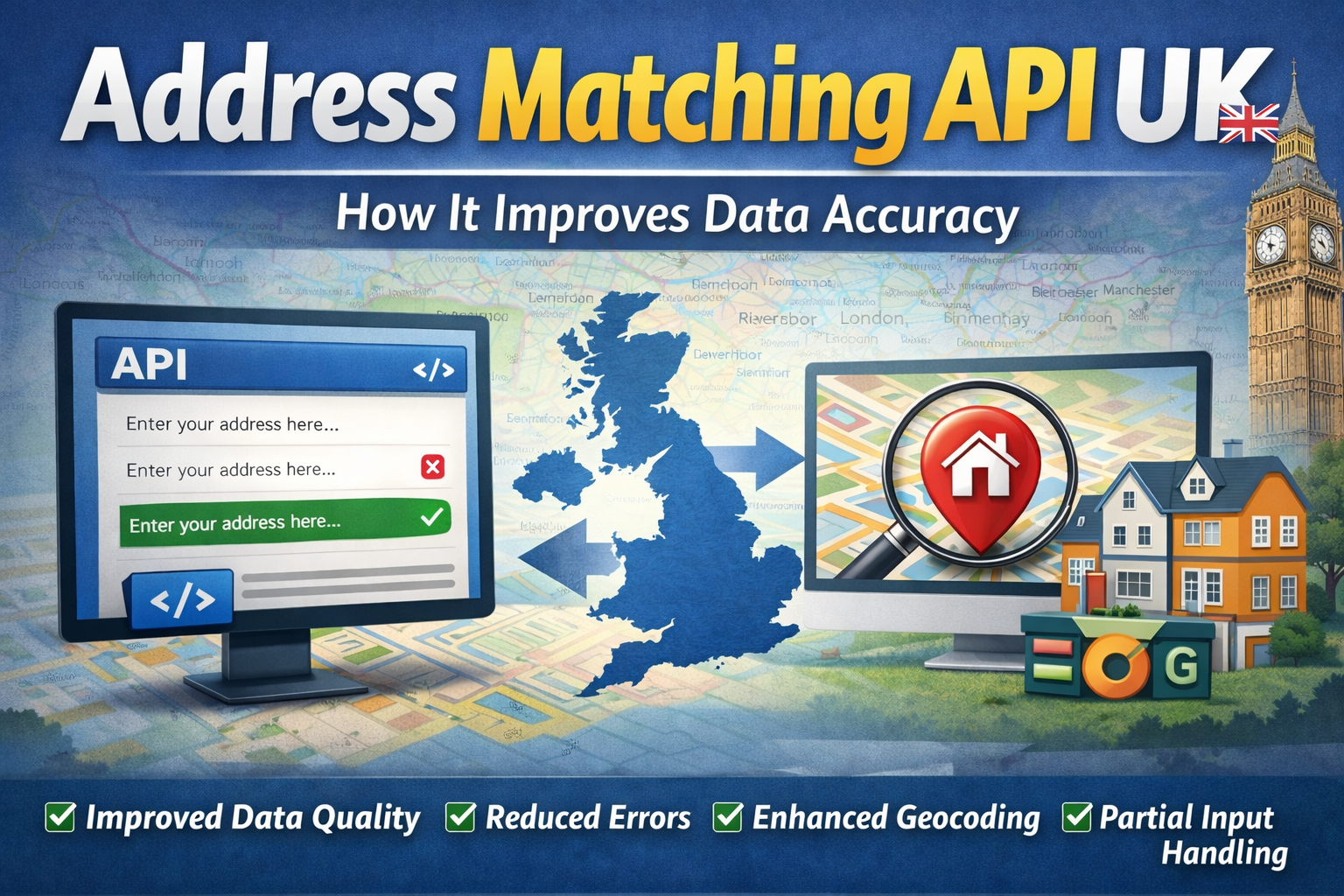
Address Matching API UK: How It Improves Data Accuracy

Accurate address data is essential for businesses across the UK. From online shopping deliveries to customer databases, even a small mistake in an address can cause delays, failed deliveries, and extra costs. This is where an Address Matching API UK becomes a powerful solution.
By automating how addresses are captured, cleaned, and matched, APIs help businesses maintain high-quality data and improve overall efficiency. In this guide, we’ll explore how address matching APIs work, why they matter, and how they support industries like eCommerce and logistics.
What Is an Address Matching API?
An Address Matching API is a software solution that takes an address input and checks it against trusted databases to ensure it is correct and complete. It identifies address components, standardises them, and matches them to official records such as the Royal Mail Postcode Address File (PAF).
In simple terms, the API compares the entered address with verified data sources and automatically corrects errors such as incorrect postcodes, spelling mistakes, or missing details. This makes it a dependable solution for ensuring accurate and consistent address data.
How Address Matching APIs Work
Address matching APIs follow a structured process to clean and validate data. First, the input address is broken down into components such as street name, postcode, and building number. This process is known as parsing.
Next, the API standardises the address into a consistent format, ensuring all records follow the same structure. It then matches the address against official datasets. If the address is incomplete or incorrect, the system suggests the closest valid match.
Many APIs also use fuzzy matching, allowing them to identify the correct address even when there are spelling errors or missing details. In addition, they can enrich data with geographic coordinates, making them a powerful solution for GIS integration and location analysis.
Improving Data Accuracy and Reducing Errors
Manual data entry often leads to typos, inconsistent formats, and missing information. These errors can negatively impact business operations.
Address Matching APIs provide a reliable solution by validating addresses in real time. As users enter their address, the system can suggest correct options and prevent invalid entries. This significantly reduces the chances of incorrect data entering the system.
By maintaining clean and standardised data, businesses can avoid costly issues such as failed deliveries, customer complaints, and wasted resources.
Supporting eCommerce and Online Businesses
eCommerce businesses depend heavily on accurate address data. A single incorrect address can result in failed deliveries, refunds, and poor customer experience.
Address matching APIs offer an effective solution by improving the checkout process through autocomplete features. Customers can quickly select their correct address, making the process faster and more user-friendly.
This not only improves user experience but also ensures accurate data capture and reduces cart abandonment rates. Businesses can also validate large customer databases, ensuring marketing campaigns and deliveries reach the right audience.
Enhancing Logistics and Delivery Operations
Logistics and delivery companies rely on precise address data to operate efficiently. Incorrect or incomplete addresses can lead to delays, missed deliveries, and increased costs.
Address matching APIs provide a practical solution by ensuring every address is validated before dispatch. They also offer geocoding data, including latitude and longitude, which can be integrated with GIS systems.
This enables route optimisation, better planning, and faster deliveries. As a result, businesses can reduce fuel costs, improve efficiency, and deliver better service.
Cleaning and Matching Large Data Sets
Many organisations store large volumes of address data in CRM systems and databases. Over time, this data can become inconsistent or outdated.
Address matching APIs offer a scalable solution for data cleansing. They can process large datasets, remove duplicates, and match records to verified addresses.
This ensures that all data remains accurate, consistent, and ready for use. Clean data also supports better decision-making and more effective business strategies.
Integration with Modern Systems and Applications
Address matching APIs are flexible and easy to integrate into websites, mobile applications, and business systems such as CRMs and eCommerce platforms.
Most APIs use REST technology, making integration simple and efficient. Businesses can validate addresses in real time or process them in bulk, depending on their needs.
These APIs are highly scalable, making them suitable for both small businesses and large enterprises.
The Future of Address Data in the UK
As digital services continue to grow, the demand for accurate address data will increase. Address matching APIs are becoming a standard solution for businesses aiming to improve efficiency and customer experience.
With advancements in GIS, automation, and artificial intelligence, these APIs will become even more powerful, providing deeper insights and more advanced data capabilities.
Conclusion
Address Matching API UK solutions play a vital role in improving data accuracy. More importantly, they provide a reliable and scalable solution to common address data challenges.
By automating validation, cleaning, and matching, these APIs help businesses reduce errors, save time, and enhance customer satisfaction. In a data-driven world, adopting an address matching API is no longer optional—it is essential for long-term success.