Adjustable Louvered Aluminum Pergola: Industrial Outdoor Comfort for US Logistics Sites

In the United States, logistics yards, warehouse facilities, and industrial operational zones require durable, weatherresistant outdoor structures that support worker comfort, equipment staging, and safe rest areas. An adjustable louvered aluminum pergola provides stable shade, controlled ventilation, and reliable weather protection while meeting industrial durability demands. This article examines structural design, safety standards, performance factors, and best practices for industrialgrade pergola systems.
Core Functions and Industrial Applications
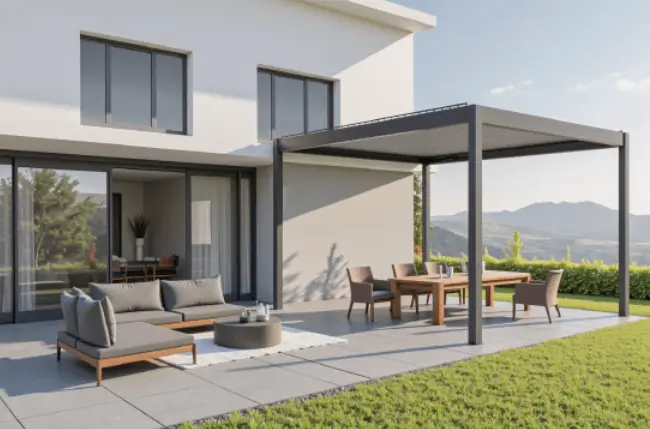
An adjustable louvered aluminum pergola is a rigid outdoor structure designed for commercial and industrial use.
· Covered rest areas for warehouse and logistics staff
· Protected staging zones for tools, packaging materials, and light equipment
· Shaded inspection areas for incoming and outgoing shipments
· Weatherresistant space for outdoor break zones and staff meetings
The model supports these functions with a stable aluminum frame and adjustable roof components.
Importance of Safety and Operational Comfort
Consistent outdoor comfort reduces worker fatigue and supports operational safety. Extended exposure to sun, rain, or extreme temperatures increases error risks and reduces productivity. A properly designed pergola maintains stable working conditions and supports compliance with industrial workplace standards.
Technical Foundation and Design Specifications
Key structural features ensure industrial performance.
· Full aluminum frame for rust resistance and structural stability
· Dual independent louver panels adjustable from zero to ninety degrees
· Concealed gutter system for controlled rainwater drainage
· Polyester privacy curtains and nylon mesh netting for insect protection
· Ground stakes and expansion screws for multisurface anchoring
These features support reliable performance in varied industrial environments.
Factors Affecting Performance and Longevity
· Correct anchoring based on ground surface type
· Regular inspection of louver mechanisms and crank handles
· Clearance from moving equipment and hightraffic operational zones
· Removal of snow and debris to preserve load capacity
· Proper alignment of drainage channels to prevent water buildup
Safety Best Practices
· Install on level, compacted ground or concrete surfaces
· Use appropriate anchoring for wind resistance in open industrial areas
· Keep louver adjustment mechanisms clear of obstructions
· Inspect all fasteners and support columns at regular intervals
· Do not exceed the specified snow load capacity of the structure
See also: Stylish Home Environment and Interior Care Guide for Better Living
Advantages and Limitations
Advantages
· Rustproof aluminum construction for long industrial service life
· Manual louver control for precise sunlight and ventilation adjustment
· Integrated drainage reduces slip hazards and structural damage
· Curtains and netting enhance privacy and worker comfort
· Adaptable installation on multiple outdoor surface types
Limitations
· Requires proper anchoring to maintain wind resistance
· Regular cleaning needed to preserve louver and drainage function
· Not designed for heavy equipment storage or structural loading
RealWorld Industrial Example
A distribution center in Texas installed this louvered pergola as a staff break area near loading bays. Workers used the space for rest periods while remaining protected from direct sunlight and rain. The adjustable louvers allowed ventilation control, and the aluminum structure maintained stability in high ambient temperatures.
Conclusion and Industry Trends
Adjustable louvered aluminum pergolas remain a practical solution for industrial outdoor comfort in the United States. Future trends include enhanced corrosion resistance, integrated windresponsive mechanisms, modular component designs, and improved drainage systems. These advances will strengthen safety, durability, and functionality for logistics and industrial site applications.