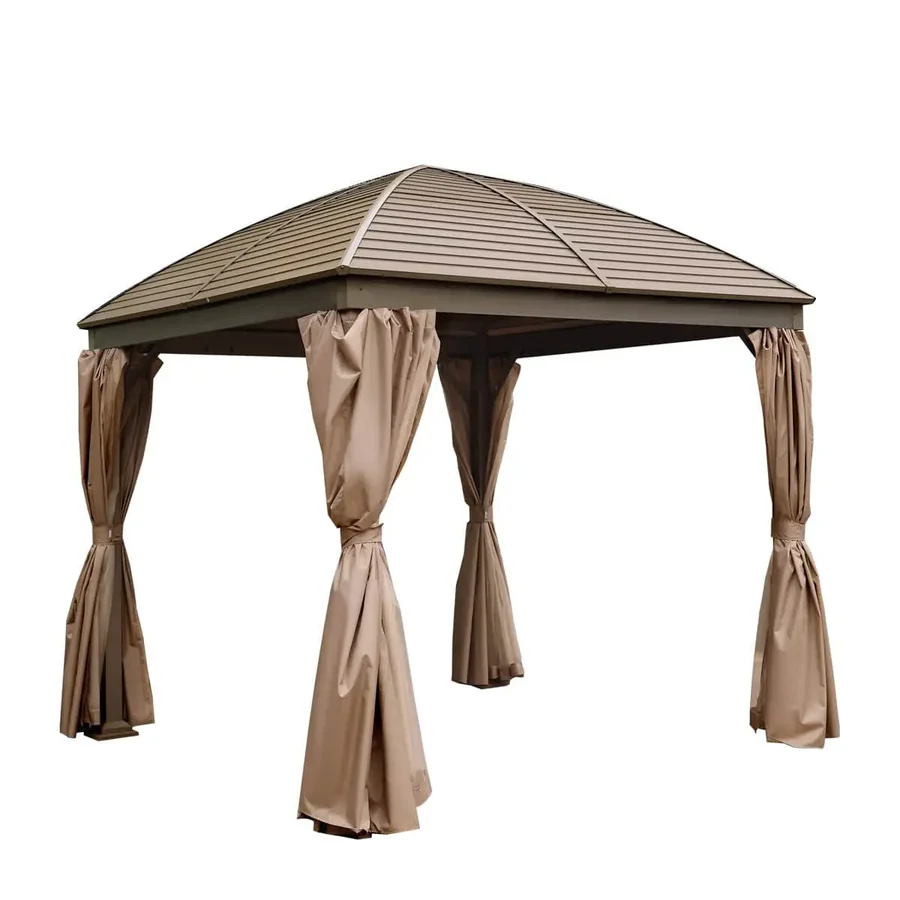
Operational Guide to Hardtop Curved Steel Roof Patio Gazebo Structures in Industrial Settings

Market Context and Practical Importance in Canada
In Canada, logistics and warehouse operations often face weather challenges such as rain, snow, and seasonal temperature changes. Covered outdoor structures are widely used to protect staff, equipment, and goods during handling tasks. A hardtop curved steel roof patio gazebo provides a stable shelter solution for temporary workspaces, rest areas, and staging zones. For warehouse managers and equipment operators, these structures improve operational continuity by reducing weather-related delays.
Technical Overview and Applications
This type of gazebo features a steel roof with a curved profile designed to support water runoff and snow shedding. The frame is typically made from coated metal to resist corrosion. Additional features such as curtains and mosquito netting allow controlled airflow and protection from insects.
Common Use Cases
- Outdoor rest zones for warehouse staff
- Covered inspection or packing stations
- Temporary storage for sensitive materials
- Shelter for equipment staging areas
See also: Stylish Home Environment and Interior Care Guide for Better Living
Efficiency, Safety and Productivity Benefits
Providing a covered workspace improves efficiency by allowing tasks to continue in varying weather conditions. Workers can perform inspections or packing tasks without interruption. Safety is enhanced by reducing exposure to wet or slippery surfaces. This contributes to more stable workflows and fewer delays in logistics operations.
Technical Considerations and Capabilities
The curved steel roof is designed to handle moderate snow loads while directing water away from the structure. The frame must be securely anchored to ensure stability. Modular assembly allows relocation or reconfiguration depending on operational needs. Curtains can be adjusted to control visibility and airflow.
Factors Affecting Performance and Durability
- Snow accumulation and wind exposure
- Quality of anchoring and installation surface
- Material coating and corrosion resistance
- Frequency of maintenance and inspection
Safety Considerations and Best Practices
Proper installation is essential to prevent structural movement. Anchors must match the ground condition. Regular inspection should confirm that all connections remain secure and that roof panels are intact. Snow should be removed when accumulation exceeds design limits.
- Ensure stable anchoring before use
- Keep surrounding areas clear for safe access
- Inspect fasteners and joints regularly
- Use protective equipment during installation
Equipment, Tools and Accessories
Installation and operation may require:
- Ground anchors and fastening systems
- Basic assembly tools
- Ladders for roof installation
- Optional side panels for weather protection
Advantages and Limitations
Advantages include weather protection, flexible placement, and relatively simple installation. The open design supports ventilation and visibility. Limitations include limited insulation and reduced protection during extreme weather events compared to enclosed structures.
Real-World Example
A warehouse facility in British Columbia installed several hardtop gazebos to create outdoor packing stations during peak seasons. This allowed overflow work to continue outside the main building. The facility reported improved throughput and reduced indoor congestion, while workers benefited from a sheltered environment during light rain.
Conclusion and Future Trends
Hardtop curved steel roof patio gazebo structures offer a practical solution for extending usable workspace in industrial environments. As logistics operations grow, the demand for flexible outdoor infrastructure is expected to increase. Future developments may include improved load capacity, integrated lighting systems, and modular expansion options. These structures will continue to support safe and efficient operations across a range of industrial applications.